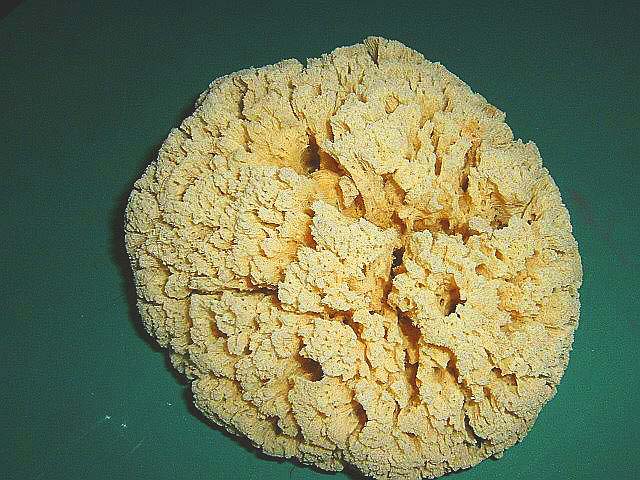
 became an object is rare but we was easily alongside a pumice of Sicily on the edge of a tub foot a brown color instead of orange, with a honeycomb structure, and soaked with a characteristic smell of soap, a sponge bath is [ Spongia officinalis , photo-cons] ... Today our image of the sponge has changed, of course there's Bob on one side and the other Scotch Brite, equipped with the scraper to blush a hedgehog.
 Pleasure systematists
 SpongeBob cited in the introduction, will still deserves a remarkable despite its rectangular shape and pineapple house, one to include in the collective unconscious that sponges are animals, not plants. This question has indeed long been a subject of contention in the nineteenth century. Indeed, life fixed, the lack of well-defined nervous system or motility (ability to move) suggest that large sponges are plants. However, the heterotrophic mode of nutrition, and stages of development with the presence of two germ layers, indicating that this is the life of animals fixed.
 [Ci-cons: SpongeBob, hero of the eponymous animated series]
Even today sponges are a puzzle to systematists, with animals as simple as the number of characters allowing establish a classification within the group is small and does not define sets of a robust phylogenetic perspective. Fortunately molecular studies provide new characters (including 18S rRNA), which should allow in the coming years to stabilize the classification of sponges. Currently sponges are classified into three groups: demosponges that have complex shapes (types Leucon), sponges hexactinellids , including the "skeleton" is siliceous and calcareous sponges finally (calcareous skeleton).
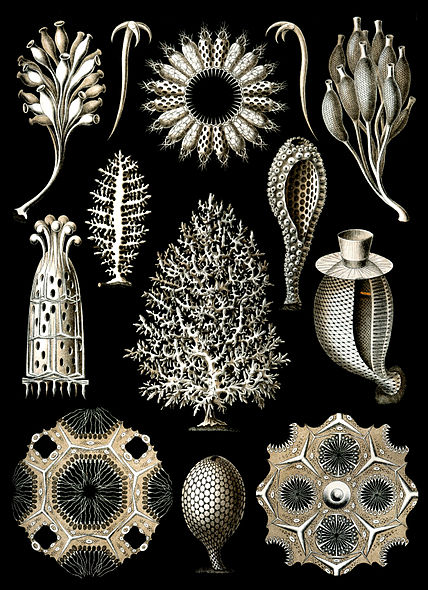

[calcareous sponges (left) and sponges hexactinellids (right), instrument H. Haeckel, 1904 ]
spicules and spongin
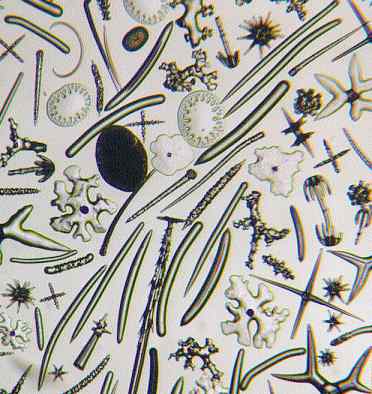 What is a skeleton of a sponge when it comes? The sponges are pretty much skins that filter and trap food particles present in the water current created by flagellated cells Typical choanocytes. These filtration structures retain their shape through "sticks" of rigid support: the spicules, siliceous or calcareous secreted by scleroblastes.
 [spicules of sponges: Their shapes are varied traditional ANOVA. ]
In the demosponges these spicules are sometimes associated with proteins such as spongin, a particular form of collagen dispersed or organized in large fibers. Sometimes the spikes are totally absent and only the remaining spongin to form the structure of the sponge is particularly true of sponges: Spongia officinalis .

Reproduction and regeneration
The regenerative capacity the sponges are very important. Thus, when the cells are separated sponges, they can come together and reorganize themselves spontaneously to reform the sponge. Similarly fragments of individuals can regenerate an entire sponge is the 'cuttings "Sponges, method used for production in many sponges.
This may seem surprising in an organism as simple, but sponges are gonochoric, that is to say that the sexes are separate (there are male individuals and female individuals). The male's sperm are released into the water and are at the mercy of chance choanocytes caught by a female individual. The choanocyte turns and then migrates to the heart of the sponge to bring the female sperm into an oocyte. After which, after fertilization and incubation in the body of the female larva "amphiblastula" is released and will be fixed on a support after a period of free life when she moves.
sponges still useful ...
Despite the advent of synthetic materials with remarkable properties can largely supplant natural sponges, they still have many interests including science. The sponges are in fact reservoirs of biodiversity, and a specimen of G eodia mesotriaena harvested in the Gulf of California had more than 100 species different algae or animals without counting the bacteria. Pharmacologists are also looking closely sponge, was the lack of immune system, they produce antivirals such as spongopurine, and antibiotics such furospongine while spongopridine has antitumor properties.
Conclusion: Yes SpongeBob is really a hero!
 [Symbiosis Crab / demosponges: This crab has a piece cut to size in the genus Suberites demosponges which benefits from food debris while it camouflages its bearer.]
wikipedia article: sponges
The regenerative capacity the sponges are very important. Thus, when the cells are separated sponges, they can come together and reorganize themselves spontaneously to reform the sponge. Similarly fragments of individuals can regenerate an entire sponge is the 'cuttings "Sponges, method used for production in many sponges.
This may seem surprising in an organism as simple, but sponges are gonochoric, that is to say that the sexes are separate (there are male individuals and female individuals). The male's sperm are released into the water and are at the mercy of chance choanocytes caught by a female individual. The choanocyte turns and then migrates to the heart of the sponge to bring the female sperm into an oocyte. After which, after fertilization and incubation in the body of the female larva "amphiblastula" is released and will be fixed on a support after a period of free life when she moves.
sponges still useful ...
Despite the advent of synthetic materials with remarkable properties can largely supplant natural sponges, they still have many interests including science. The sponges are in fact reservoirs of biodiversity, and a specimen of G eodia mesotriaena harvested in the Gulf of California had more than 100 species different algae or animals without counting the bacteria. Pharmacologists are also looking closely sponge, was the lack of immune system, they produce antivirals such as spongopurine, and antibiotics such furospongine while spongopridine has antitumor properties.
Conclusion: Yes SpongeBob is really a hero!

wikipedia article: sponges


0 comments:
Post a Comment