
An island in a polar situation "hot"!
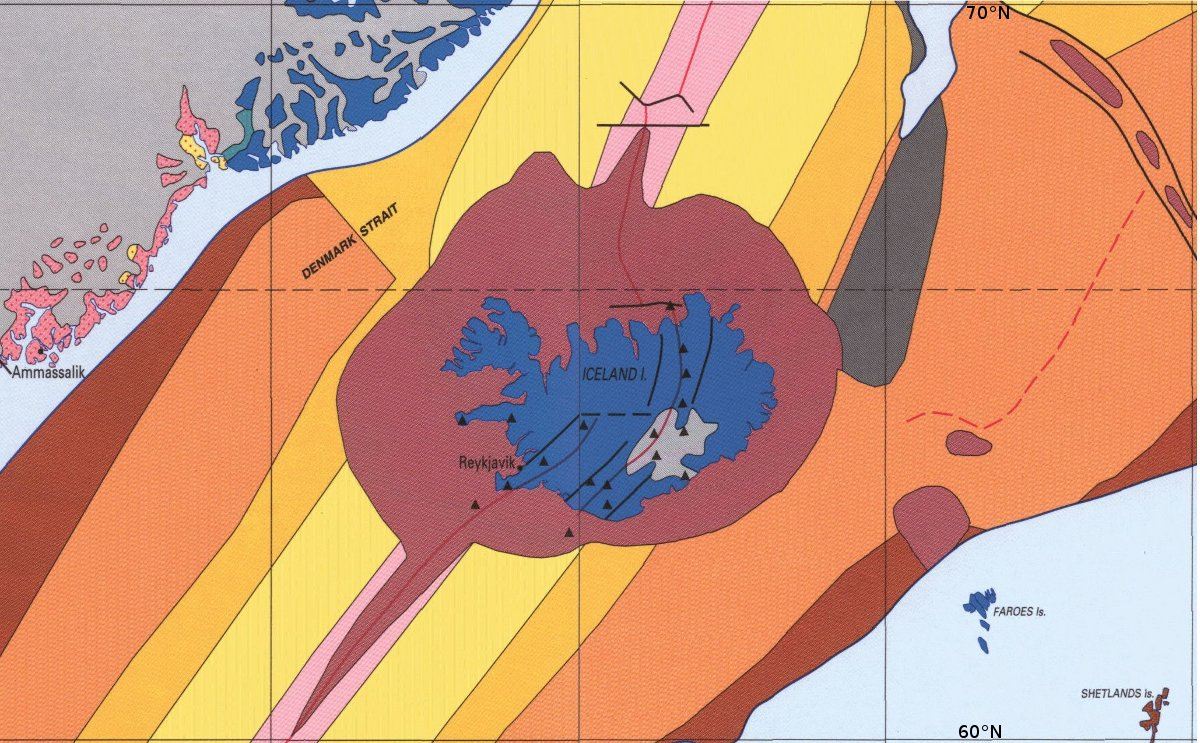 And yes Iceland is really the tip of a volcanic mountain range of 2000m to 3000m and 60 000km in length: the ocean ridge. It is at this string that 70% of the lava poured onto Land is released, usually in water and thus in a rather "discreet."
 [ On the geological map of the symmetrical arrangement of land either side of the axis of the ridge shows us the situation in Iceland ]
But Iceland is also located on the plumb a hot spot; those areas where plumes of magma from very deep areas amounted to form volcanic islands among the busiest in the world such as Hawaii or the Meeting.
In both cases the magma that rises in these areas is poorly differentiated (type tholeiitic lavas to alkaline for Iceland) and thus gives rise to fluid lava which flow on the surface without creating any difficulty in passing superb cast and other fountains of lava ... Brief were expressed effusive volcanoes, and we can not say they are manifested by explosions where the emission of dust "anti-aircraft" ...

[ The fountain of lava from Iceland also Krafka ]
In fact the problem is that the volcano is covered by a glacier meets the Eyjafjallajökull sweet name! When the magma reaches the surface it heats the ground and melts the ice, water seeps into even more depth that soil is easily distorted by rising magma. When water comes into contact infiltrated magma, it vaporizes. Water vapor is a gas, its volume is significantly higher than that of water, and space is available as to its rather small at this depth. Result, a huge explosion that sprays millions of particles rocks. And that's how cubic meters of rocks are found in the atmosphere in a huge cloud of dust ...
These phenomena of contact between water and magma are referred to as phreatomagmatism ("phreato" as the water table) for a volcano and glacier, a particular case of the Icelanders phreatomagmatism the term "jökuhlhaup" (always unpronounceable).
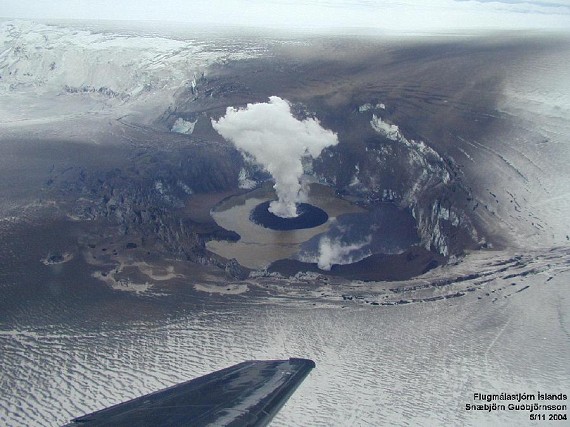
[ Volcano Islands "Grímsvötn" emerging bottom of the glacier that covered before the eruption ]
planes on the ground: And yes reactors do not like too much dust for several reasons: the decrease in the amount of oxygen available (for combustion), abrasion and mechanical damage caused by the particles turbines especially if they are based (which is more than likely at 1200 ° C), which may even go to the blockage of the turbine.
Climate Changes: If the cloud reaches the highest layers of the atmosphere it can remain airborne for a relatively long time, and reduced solar radiation then causes a fall average temperatures as was the case for the eruption of Pinatubo in 1991 when global mean temperature fell of 0.5 ° C.
Health risks: when they fall very fine particles can cause respiratory problems in sensitive people like when pollution peaks.
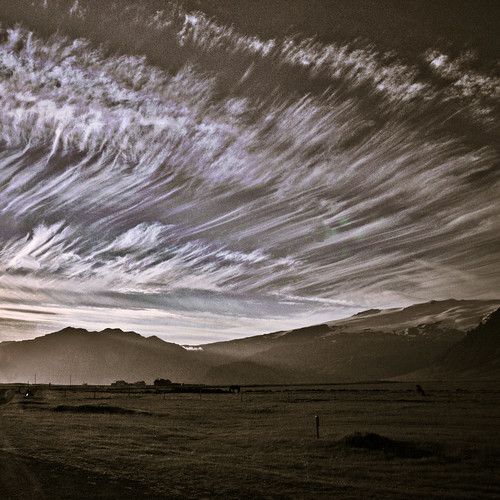
Beautiful sunsets: particles suspended in the air also have the effect of diffracting light rays thus producing iridescent colors; result: every sunset may soon resemble the biblical images of the descent of God Earth ... (It had to end on a positive note!)
Those who have renounced dubbed "Volcano Islands" others have tried this is what happens:
(For my part I am happy not having to read the article!)


0 comments:
Post a Comment