 With a few months behind the buzz of this school year, here I am too sucked in the media storm and attracted by the easy topics: flu! A particular point will hold my attention: the names data virus! Avian influenza? Swine flu? English Flu? Flu? H1N1, H5N1?
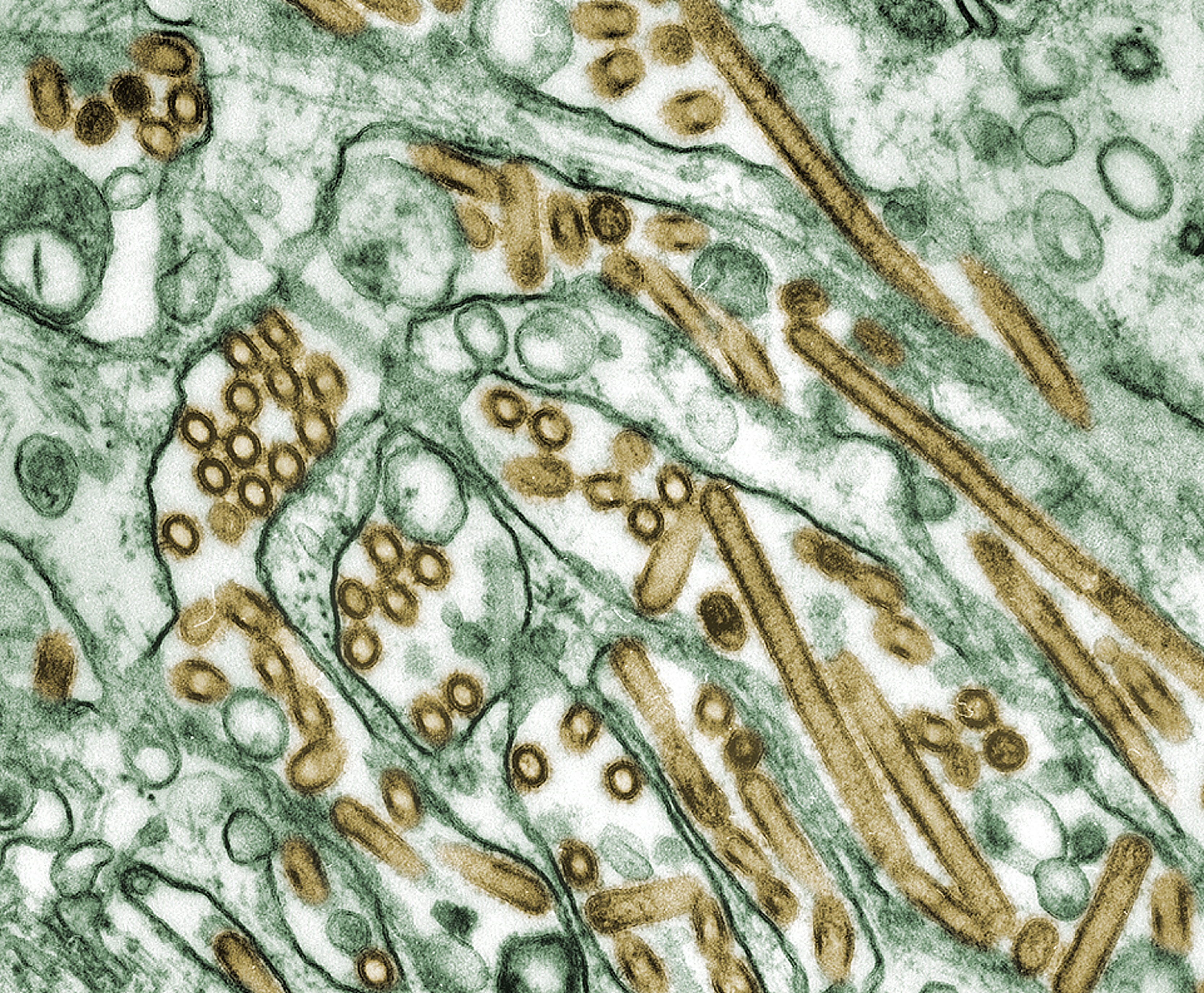
 [The influenza "flu" A (H5N1) in gold on the photo]
Initially the virus was!
Influenza is a disease caused by a virus Myxovirus influenzae , named for it causes flu-like symptoms, influenza means in Italian: "fluid flow". The term influenza has now become synonymous with the flu. The genetic code of the virus is written in single-stranded RNA segmented (7-8 single strands of RNA in the virus), which actually a retrovirus like HIV / AIDS for example. Depending on the virus genome (including the number of segments) there are three categories of influenza virus: influenza A
The very aware that because of all influenza pandemics and infects humans, other mammals and birds. The influenza B that infects humans and seals! And finally, the influenza C much rarer that infects humans and pigs. So that's why we talk about flu!
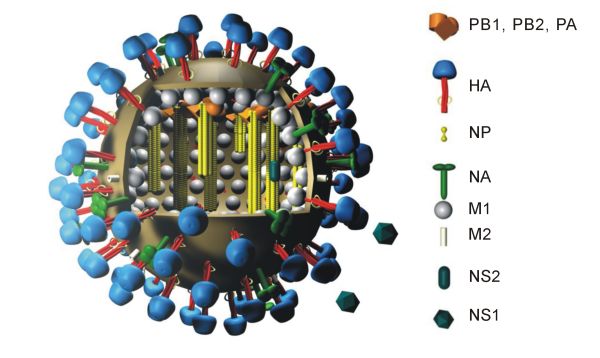
[The influenza virus A and ten proteins encoded by its genome.]
What do the letters H and N?
The virus genome consists of 7 to 8 segments code for each time a dozen proteins, among them two are characteristics of a flu virus and can be classified into subtypes:
The hemagglutinin (denoted HA) and neuraminidase (NA). These two glycoproteins that make up the capsid are antigens (molecules recognized as foreign by the body) whose variation is important. Thus there are 16 types of hemagglutinin and 9 neuraminidase types (ie 15x9 = 144 different possibilities). Their role is to allow entry into the cell in the body will be infected for the hemagglutinin and allow the budding of new virus neuraminidase.
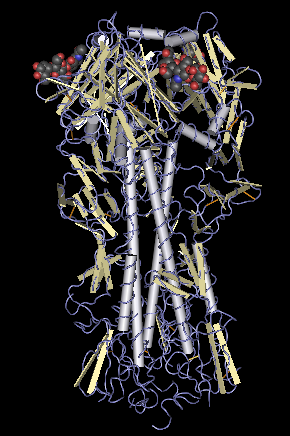

In birds, the subtypes are more pathogenic features a hemagglutinin H5 or H7. Yep remember the famous so-called bird flu "H5N1" ...
An epidemiological concept: the focus of infection
Note that new subtypes may emerge by rearrangement and exchange of RNA segments in one animal consistent with many subtypes such as the pig. When viruses H5N6 and H1N1 are found in another one organization, it can then give rise to a new subtype as H5N1. Such a phenomenon described as an "antigenic shifting" is responsible outbreaks, such as the devastating English flu of 1918 (40 million dead). Indeed the people who come into contact with this new virus then has no immunity against it, and if the pathogen is then the consequences can be dire ... From this point of emergence or outbreak of endemic infection, the virus is transmitted when receiving a see epidemic to a pandemic.
Finally, what name to use?
Like a virus can mutate while maintaining the same subtype, and this was the case this winter to the Mexican flu A (H1N1) there is a significant probability of seeing a resurgence in the type already known. It therefore appears more appropriate to name each episode epidemic by date and site of infection "essential". So English flu, or Mexican is actually more interesting than influenza A or influenza H1N1, whatever the English and Mexican ...


0 comments:
Post a Comment